

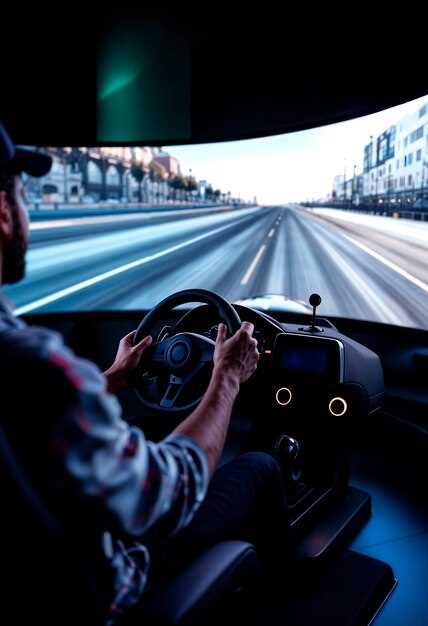
In the realm of motorsports, the fusion of technology and traditional training methods has ushered in a new era of driver preparation. Sim racing has emerged as an invaluable tool for enhancing the skills and techniques of aspiring and professional drivers alike. The immersive experience provided by advanced racing simulators enables drivers to refine their abilities in a controlled environment, significantly reducing the risks associated with real-world practice.
One of the most compelling advantages of incorporating sim racing into driver training programs is the ability to analyze performance data in real-time. With sophisticated telemetry systems, drivers can assess their racing lines, braking points, and acceleration techniques, allowing them to make precise adjustments. This analytical approach fosters a deeper understanding of driving dynamics, ultimately translating to improved performance on the track.
Moreover, sim racing offers a unique platform for drivers to practice under various conditions without the logistical challenges of real-world testing. From different weather scenarios to diverse track layouts, drivers can simulate countless racing environments, preparing them for any eventuality they may encounter during actual races. By integrating virtual racing into their training regimens, drivers gain a comprehensive toolkit that enhances their adaptability and decision-making skills when facing unpredictable race dynamics.
Improving Reaction Times and Decision Making in Sim Racing Environments
Sim racing provides a unique platform for enhancing a driver’s reaction times and decision-making abilities. In the immersive virtual world of sim racing, drivers encounter a variety of scenarios that closely mimic real-life racing conditions. This allows drivers to rapidly adapt to changes in their environment, improving their reflexes and responses to unexpected situations.
One of the key benefits of sim racing is the ability to practice repeatedly under controlled conditions. Drivers can experience numerous track layouts, weather conditions, and car dynamics without the risks associated with real-world racing. This repetition aids in developing muscle memory, enabling drivers to execute faster reactions when faced with high-pressure situations on the track.
Additionally, sim racing environments utilize advanced algorithms to simulate real-time scenarios, presenting drivers with challenges that require quick decision-making. This simulation forces drivers to assess their surroundings and make split-second choices about braking, accelerating, or overtaking. Such practice can significantly enhance a driver’s cognitive skills, as they learn to predict outcomes and react accordingly.
Moreover, the feedback systems in many sim racing setups provide immediate insights into a driver’s performance. Analyzing data such as lap times, speed variations, and error rates allows drivers to identify areas for improvement in their reaction times and decision-making processes. This feedback loop is invaluable for refining skills and preparing for the dynamics of actual racing conditions.
In conclusion, sim racing serves as a powerful training tool, enabling drivers to sharpen their reaction times and decision-making skills in a safe environment. As drivers engage with various scenarios and receive real-time feedback, they not only enhance their performance in simulations but also lay the groundwork for success in real-world racing situations.
Utilizing Telemetry Data from Simulations for Performance Analysis

Telemetry data collected from simulations plays a crucial role in enhancing training programs for real drivers. This data offers detailed insights into various performance metrics, enabling drivers and coaches to make informed decisions for improvement.
Key aspects of utilizing telemetry data include:
- Real-time Feedback: Simulations provide immediate telemetry feedback, allowing drivers to assess their performance instantly.
- Data Visualization: Graphs and charts present telemetry data clearly, helping drivers comprehend their performance trends over time.
- Comparative Analysis: By comparing telemetry from multiple simulation sessions, drivers can identify specific areas for improvement.
Some important telemetry parameters that can be analyzed are:
- Throttle Position: Analyzing how and when a driver applies throttle can indicate their acceleration efficiency.
- Brake Force: Understanding braking patterns assists drivers in optimizing their braking techniques.
- Steering Angle: Monitoring steering inputs can reveal whether drivers are effectively managing the car’s handling.
- Lap Time Consistency: Tracking lap times throughout a simulation helps in evaluating performance stability.
Incorporating telemetry analysis into training allows drivers to:
- Make precise adjustments based on quantitative data rather than intuition alone.
- Strategically set goals and benchmarks for continuous improvement.
- Enhance decision-making skills by understanding the consequences of their actions in real-time.
Ultimately, the use of telemetry data from simulations empowers drivers to refine their skills, leading to improved performance on real racetracks. This integration of technology not only enhances training efficiency but also bridges the gap between simulation practice and actual racing experiences.
Cost-Effective Way to Enhance Real-World Driving Skills

Utilizing sim racing as a training tool presents a cost-effective approach for aspiring and experienced drivers alike. The financial barrier to accessing professional driving schools and track days can be substantial, often prohibiting many from obtaining vital experience. In contrast, sim racing platforms offer an affordable alternative that encompasses a wide range of environments, vehicle types, and driving scenarios.
Sim racing enables drivers to practice essential skills without the associated costs of fuel, maintenance, and track fees. Through repeated practice in a digital environment, drivers can improve their reaction times, understanding of vehicle dynamics, and overall situational awareness. The immersive nature of high-quality simulators fosters a learning environment where practitioners can refine their skills at their own pace.
Moreover, sim racing can simulate varying conditions, such as rain or night driving, which are often hard to replicate in real-world training. This exposure allows drivers to prepare for unforeseen circumstances, ultimately leading to increased confidence and competence on the road.
By integrating sim racing into their training regimen, drivers can diversify their skillset while minimizing costs associated with traditional training methods. This not only makes the learning process more accessible but also promotes a deeper understanding of racing techniques that can be applied in real-world scenarios.


